CORE Project Kenya

Work Package 1: Oral Health Inequalities

This work package investigates the scale, causes, lived experiences, and possible solutions to oral health inequalities among disadvantaged and marginalised populations.

Overview

Insights

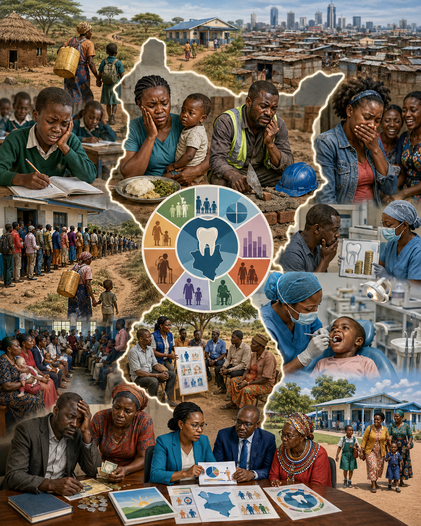
Work Package 1 focuses on the unequal distribution of oral diseases and oral health outcomes across different social and economic groups. It recognises that oral health is shaped not only by individual behaviour, but also by poverty, social exclusion, access to services, food environments, public policy, and the wider conditions in which people live and work.

Approach

The work package combines quantitative analysis, qualitative research, simulation modelling, community engagement, and feasibility testing. It moves from documenting patterns of inequality to understanding lived experience, modelling possible policy responses, and co-developing interventions with communities and stakeholders.

Why this work matters

Oral diseases are often treated as minor or isolated health problems, yet they can affect eating, speaking, learning, working, social participation, self-confidence, and household finances. These effects are usually most severe among populations already facing disadvantage.

By making these inequalities visible, this work package supports a stronger public health response and provides evidence for policies and interventions that prioritise equity.

This is important because:

It identifies which groups carry the greatest burden of oral diseases.

It documents how oral health problems affect daily life and social participation.

It examines how inequalities are produced through social, economic, and service-related barriers.

It creates evidence that can guide targeted, community-informed interventions.

It supports policy dialogue through accessible outputs such as summaries, infographics, and community-facing materials.
What we are doing

WP1.1: Mapping socioeconomic inequalities in oral health

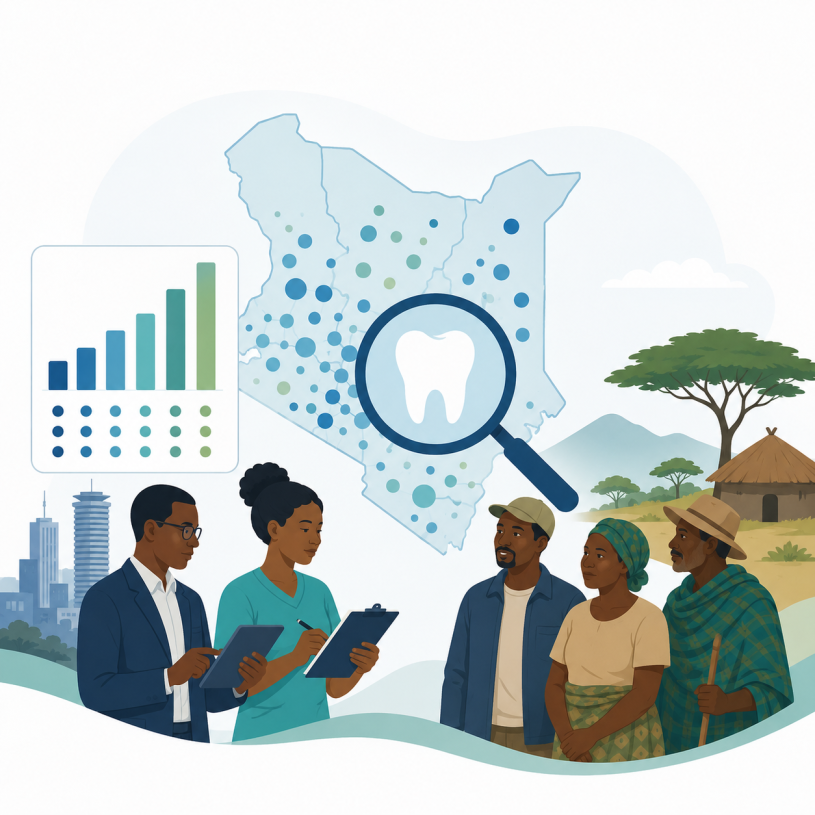
WP1.1 analyses existing national oral health surveys and related health datasets to identify how oral health outcomes differ across social and economic groups. It focuses on understanding which populations carry the greatest burden of oral diseases and how disadvantage shapes oral health outcomes. The study uses data analysis to map inequalities by socioeconomic position and other markers of vulnerability. Its findings will be translated into accessible formats to support public understanding, stakeholder dialogue, and evidence-informed policy action.

WP1.2: Exploring lived experiences of oral health inequalities

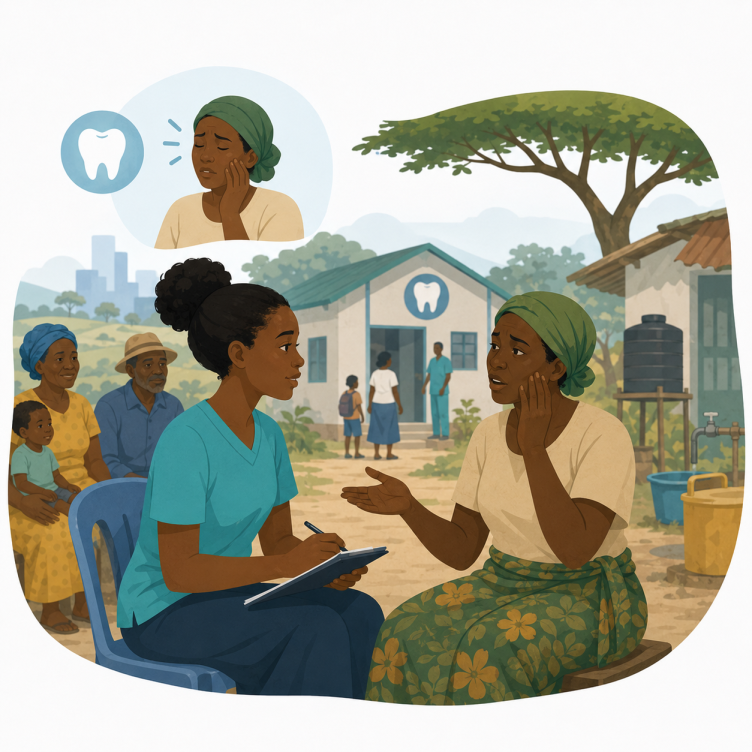
WP1.2 examines how adults from disadvantaged and marginalised communities experience oral diseases in their daily lives. It explores how oral health problems affect eating, speaking, working, social participation, self-confidence, and access to dental services. Through qualitative interviews, the study captures lived experiences, barriers to care, and community priorities. These insights help ensure that future oral health interventions are grounded in the realities, needs, and voices of affected communities.

WP1.3: Simulation Modelling of Upstream Public Health Interventions

WP1.3 uses simulation modelling to assess how different public health interventions could reduce oral health inequalities. It focuses on upstream policy and prevention approaches that address broader social, economic, and environmental drivers of oral health. By modelling possible intervention effects before large-scale implementation, the study helps identify promising policy options. The evidence generated can guide decision-making, prioritisation, and the design of more equitable oral health strategies.

WP1.4: Co-development and Feasibility Testing of Public Health Interventions

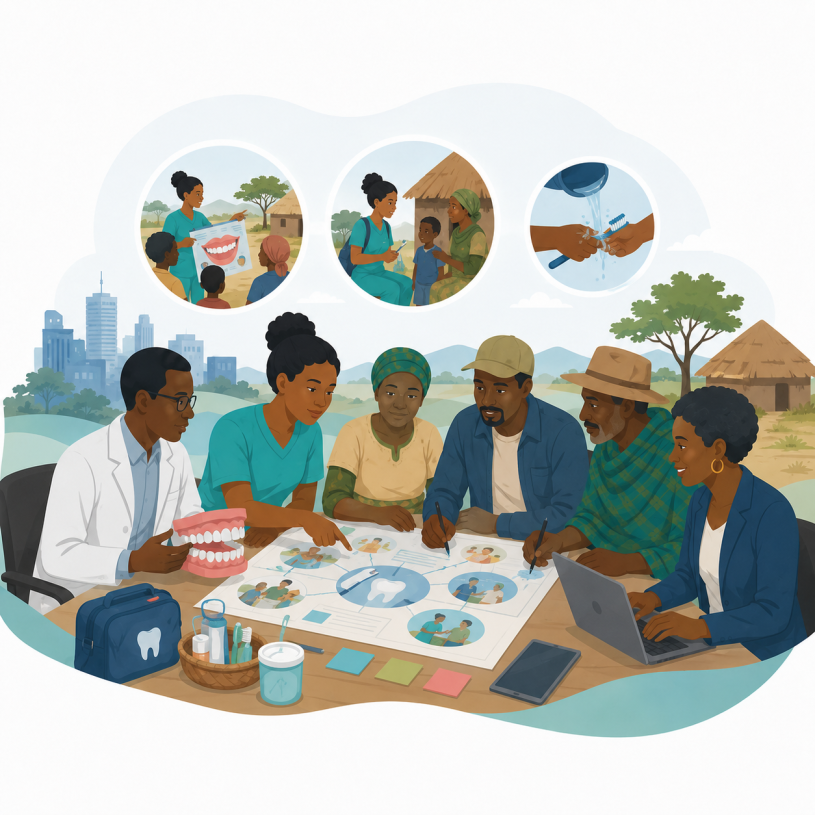
WP1.4 works with communities, researchers, and stakeholders to co-develop public health interventions aimed at reducing oral health inequalities. It builds on evidence from earlier studies to identify practical and locally appropriate intervention priorities. The study then tests whether proposed interventions are acceptable, feasible, and suitable for future evaluation. This ensures that solutions are not only evidence-based, but also realistic, community-informed, and responsive to local contexts.

Our approach

Across the four studies, CORE applies a locally grounded and rigorous research approach. Activities are adapted to the country context and supported by ethical review, informed consent, field team training, pilot testing, data quality control, secure data management, and systematic analysis.

The work package brings together quantitative and qualitative evidence to support intervention design, community engagement, local dissemination, and policy uptake.

Expected outputs

This work package is expected to generate:

  • Oral health inequality profiles.

  • Evidence on lived experiences of oral health disadvantage.

  • Policy-relevant modelling outputs.

  • Community-informed intervention ideas.

  • Feasibility study findings.

  • Public-facing summaries, infographics, and dissemination materials.