CORE Project Kenya

Work Package 3: Oral Health Systems Reform & Innovation

This work package explores how oral health services can become more affordable, accessible, integrated, and responsive to disadvantaged populations.

Overview

Insights

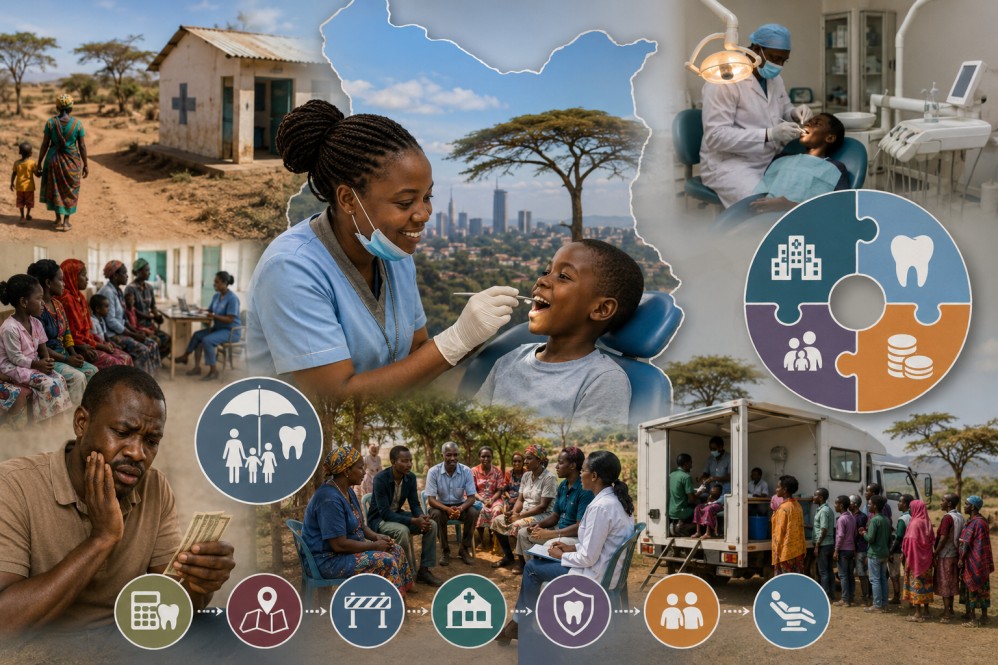
Work Package 3 focuses on oral health systems reform and innovation. It examines how dental care is financed, accessed, delivered, and integrated into wider health systems. The work package is particularly concerned with disadvantaged populations who may face financial, geographic, social, and service-related barriers to care.

Approach

The work package moves from evidence generation to practical reform. It first assesses economic burden and barriers to care, then investigates policy and political opportunities for reform, and finally supports the co-development and pilot testing of new oral health care delivery models.

Why this work matters

For many communities, oral health care is difficult to access and unaffordable when needed. Dental costs may be paid directly by households, creating financial strain or causing people to delay, avoid, or abandon care.

At the same time, oral health services may remain poorly integrated into primary health care and wider health financing systems. This work package addresses these structural problems by generating evidence for more equitable and sustainable service reform.

This is important because:

It assesses the economic burden of oral disease on households.

It identifies why disadvantaged populations may delay or miss dental care.

It explores how oral health can be better integrated into primary health care.

It examines financial protection options for essential dental care.

It supports the design and testing of reformed models of oral health care delivery
What we are doing

WP3.1: Economic Impact of Out-of-Pocket Expenditure on Dental Services

WP3.1 examines the financial burden of oral diseases by analysing household spending on dental care. It focuses on out-of-pocket payments, care avoided because of cost, and whether dental expenses create financial hardship for vulnerable households. The study generates evidence on how dental costs affect access to care and household wellbeing. Its findings can support policy discussions on financial protection, public coverage, and the inclusion of essential oral health services within universal health coverage.

WP3.2: Barriers to Accessing Dental Services Among Disadvantaged Populations

WP3.2 explores how disadvantaged adults use dental services and what prevents them from accessing timely and appropriate care. It examines barriers such as cost, distance, availability of services, satisfaction with care, informal care-seeking, and unmet oral health needs. Through population surveys, the study documents community experiences and preferences for future dental service models. The findings help identify practical ways to make oral health services more affordable, acceptable, accessible, and responsive to community needs.

WP3.3: Policy and Political Analysis of Oral Health Care System Reform

WP3.3 investigates the policy, political, and institutional factors that may support or hinder oral health care system reform. It uses qualitative interviews with policymakers, dental professional organisations, insurance actors, primary care stakeholders, community leaders, and other relevant actors. The study focuses on opportunities for integrating oral health into primary health care and improving financial protection for essential dental care. Its findings provide practical insights for designing reforms that are technically sound, politically feasible, and responsive to stakeholder priorities.

WP3.4: Co-development and Pilot Testing of Reformed Oral Health Care Delivery Models

WP3.4 works with communities, researchers, health system actors, and stakeholders to design and pilot new models of oral health care delivery. These models aim to improve access, affordability, integration, and financial protection for disadvantaged populations. The study tests whether the proposed models are feasible, acceptable, and suitable for future evaluation. By combining outcome assessment and process evaluation, it generates evidence on what works in practice and what should be refined before wider implementation.

Our approach

The work package combines economic analysis, population survey methods, qualitative policy analysis, co-development, pilot implementation, and process evaluation. This mixed-methods approach is important because reform requires evidence not only on what problems exist, but also on what solutions are practical, acceptable, affordable, and politically feasible.gn, community engagement, local dissemination, and policy uptake.

Expected Contribution

Work Package 3 contributes to the wider CORE Project by linking oral health to health systems strengthening, universal health coverage, financial protection, and primary health care. Its findings can help identify reforms that make oral health care more accessible, affordable, and responsive to the needs of disadvantaged populations.