
CORE Project Kenya

Work Package 2: Commercial Determinants of Oral Health

This work package examines how tobacco, food, and drink industries influence oral health through marketing, product promotion, political strategies, and policy engagement.

Overview

Insights

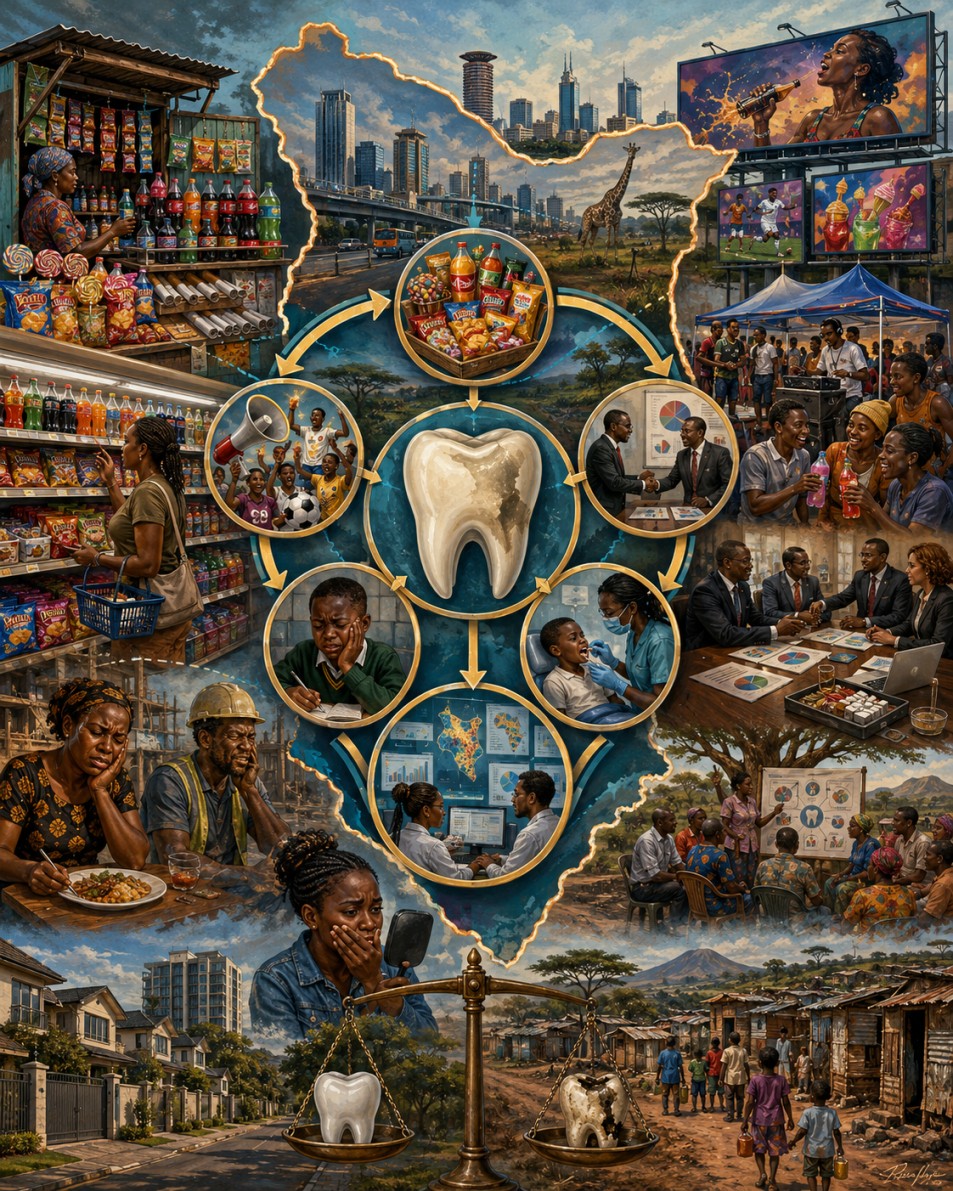
Work Package 2 focuses on the commercial determinants of oral health. These are the ways in which corporate activities, market structures, product promotion, political influence, and policy environments shape oral health risks at population level.

Approach

The work package pays particular attention to the tobacco, food, and drink industries because these sectors can influence exposure to products and environments associated with oral diseases. Rather than treating oral health only as a matter of individual behaviour, the work package examines the wider commercial and policy systems that shape choices, risks, and public health responses.

Why this work matters

Oral health is affected by the availability, affordability, promotion, and normalisation of harmful products, including tobacco products and sugar-sweetened foods and drinks. Commercial actors may influence consumer behaviour directly through marketing and indirectly through lobbying, sponsorship, corporate social responsibility activities, partnerships, and public narratives about responsibility.

Understanding these strategies is essential for designing stronger and more protective oral health policies.

This is important because:

It documents how industries promote products that can harm oral health.

It examines how corporate actors influence public debate and policy environments.

It generates evidence on market and non-market strategies used by commercial actors.

It supports policy discussions on how to reduce harmful industry influence.

It helps identify practical policy options informed by evidence and local stakeholder expertise.
What we are doing

WP2.1: Understanding corporate strategies

WP2.1 examines how tobacco, food, and drink corporations promote their products, shape public narratives, and influence oral health policy. It uses industry documents, media reports, and other publicly available materials to understand how commercial actors position their products and engage with health-related debates. The study helps identify corporate strategies that may affect consumer behaviour, public opinion, and policy environments. Its findings provide an evidence base for understanding how commercial interests influence oral health risks and how public health responses can be strengthened.

WP2.2: Qualitative Investigation of Industry Influence on Oral Health

WP2.2 explores local stakeholder perspectives on how tobacco, food, and drink industries influence oral health and oral health policy. It uses semi-structured interviews with policymakers, public health actors, academics, professional leaders, civil society representatives, and community stakeholders. The study captures how commercial influence is understood in real-world policy and community contexts. These insights deepen the findings from documentary analysis and help identify the political, market, and non-market strategies that shape oral health environments.

WP2.3: Policy Opportunities to Limit and Mitigate Industry Influence

WP2.3 brings together policy, public health, clinical, civil society, and community experts to identify practical ways of reducing harmful industry influence on oral health. Through facilitated expert panels and consensus-building methods, participants review evidence and discuss possible policy options. The study aims to develop a country-specific policy framework that can guide advocacy, regulation, governance safeguards, and public health action. Its contribution is to move evidence into practical recommendations that policymakers and stakeholders can use.

Our approach

Work Package 2 uses complementary research methods to build a fuller picture of commercial influence. Documentary evidence shows what industries do and say publicly or internally. Stakeholder interviews show how these strategies are understood locally. Expert panels help translate evidence into practical policy options.

Expected outputs

Work Package 2 contributes to the wider CORE Project by making visible the commercial and political forces that shape oral health risks. It strengthens the evidence base for policy action and helps stakeholders move from general concern about harmful products to concrete, locally relevant policy options.